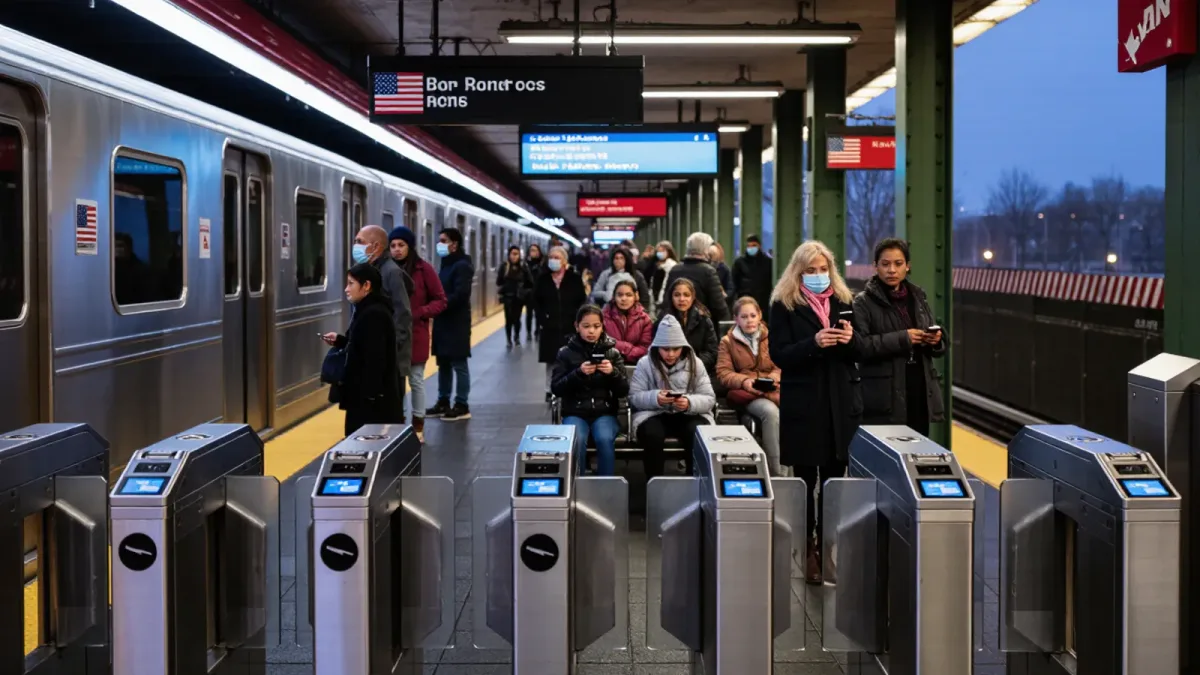
The subway ride to dinner costs a little more as of Sunday, January 4, 2026. Per the MTA, the base fare for subway and local bus trips rose from $2.90 to $3.00, the express bus fare went from $7.00 to $7.25, and the OMNY weekly fare cap moved to $36. For a diner stringing together meals in Queens, the Bronx and Manhattan in one week, the math changed by small amounts — but it did change.
This is a news brief on transit pricing, not transit or financial advice; fare rules and cap details live on the MTA's own pages and can shift again.
How much more does a dinner crawl actually cost?
One dinner in Chinatown and one in Long Island City means two swipes: $6.00 now, $5.80 before. Ten restaurant trips in a week hits the OMNY cap either way — the ceiling is the ceiling. The cap is the quiet win here: under OMNY fare capping, a rider who eats out across the boroughs all week never pays past $36, no weekly pass required, per the MTA's fare schedule adopted for January 2026.
Related stories: Two car-free Manhattan Saturdays left — and they overlap Restaurant Week · World Cup fan zones for New York are set — and restaurants are a short walk from every screen.
What should a visitor plan around?
Three things, all dated. First, tap-to-pay is effectively mandatory going forward: the MTA has said MetroCard and cash payments stop being accepted at some point in 2026, with the exact date still to be announced. Second, express buses — useful for a crosstown dinner from, say, the Upper East Side to the Hudson Yards blocks — are $7.25 a ride. Third, reduced fare riders now pay $1.50.
Does $3 change where people eat?
Barely, on its own. A subway fare is still the cheapest line item on a night that includes a $18 pasta and a $16 cocktail. What it does do is sharpen the logic of clustering: a night of back-to-back spots along a single line — the 7 in Sunnyside and Court Square, the A in Harlem — costs the same two fares as dinner and one stop. The neighborhoods already famous for feeding people cheaply got no harder to reach; they just got marginally less cheap to reach.
The fares took effect January 4, per the MTA board's adopted schedule, and every figure here reflects that schedule as of this writing. Restaurant prices, as always, are the bigger variable — and those get set kitchen by kitchen, not at 2 Broadway.